Caddo Lake Photography Guide: Cypress Swamp & Bayou Photography Texas-Louisiana
Caddo Lake Photography Guide: How To Capture The Cypress Swamps
Caddo Lake cypress swamp photography offers landscape photographers one of America's most atmospheric subjects. Located on the Texas-Louisiana border near Marshall, Texas, this ancient ecosystem features towering cypress trees draped in Spanish moss, mirror-like reflections, and ethereal morning fog—creating perfect conditions for stunning nature photography. This complete guide covers everything you need to know about photographing Caddo Lake and Louisiana bayous, from essential camera gear and composition techniques to the best seasons, locations, and how to join my exclusive photography workshop during peak fall colors.
There is a place where ancient trees rise from dark, still water, their branches draped in veils of Spanish moss. It's a world of mist-filled mornings, haunting silence broken only by the call of an unseen bird, and a primeval beauty that feels untouched by time. I scouted this place in November 2025 — the photos throughout this guide are from that trip — and what struck me first was how completely the bayou swallows sound. This is Caddo Lake and the cypress swamps of Texas and Louisiana—wetlands that offer a photographic experience unlike any other.
This post contains affiliate links for gear I personally use. I may earn a small commission if you purchase through them, at no cost to you.
Caddo Lake Photography Quick Facts
- 📍 Location: Texas-Louisiana border, near Marshall, TX & Uncertain, TX
- 🍂 Best Season: October-November (fall cypress colors)
- 🌅 Best Time: Sunrise (fog + backlit Spanish moss)
- 🎨 Peak Colors: Late October through mid-November
- 📷 Must-Have Gear: Circular polarizer filter (critical!)
- 🚣 Access: Boat or kayak required for best spots
- 📚 Experience Level: All levels welcome (guided tours available)
- 🎓 Workshop Available: Join my fall 2027 workshop →
Why Caddo Lake Photography Attracts Landscape Photographers?
What Makes Cypress Swamp Photography Unique
Caddo Lake and Louisiana cypress swamps offer a potent combination of atmosphere, texture, and dynamic light that is a magnet for photographers. The strong vertical lines of the cypress tree trunks contrast powerfully against the smooth, mirror-like water, creating natural compositional anchors. The constant interplay of water and land provides endless opportunities for capturing reflections that double the beauty of a scene. The thick canopy filters sunlight into dramatic, ethereal rays, especially when caught in the misty air of dawn. This environment is a living canvas for landscape photography, constantly changing with the weather and time of day, challenging and rewarding photographers with its raw, untamed character. It is the backdrop for truly thrilling adventures for both the senses and the lens.
Fall Colors: Best Time to Photograph Caddo Lake
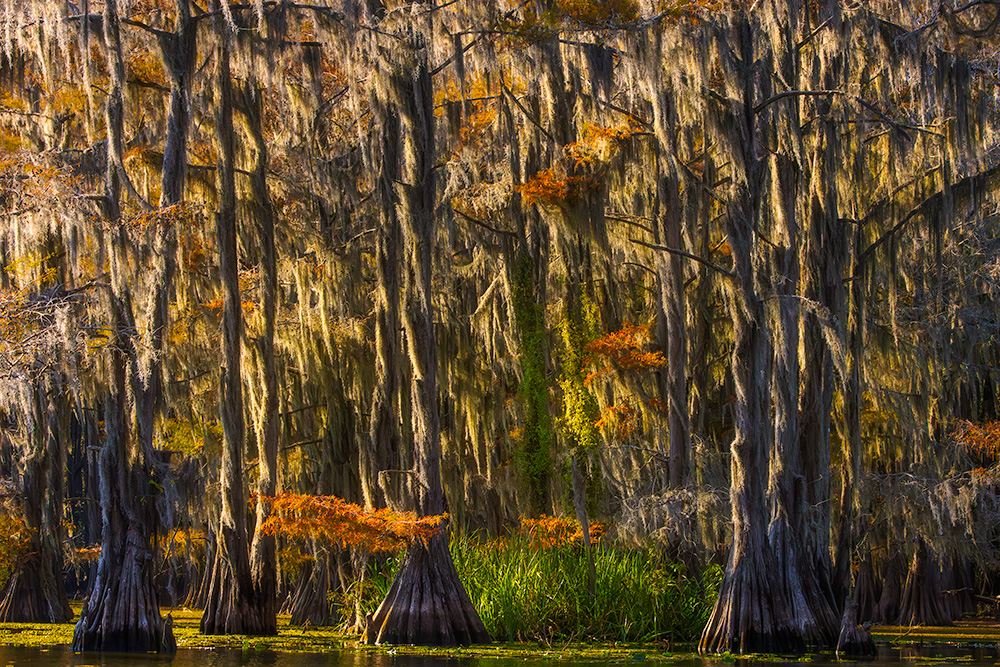
Unlike the widespread foliage of northern forests, the fall color of the bald cypress trees at Caddo Lake is a more subtle, yet equally stunning, phenomenon. When I was there in early November 2025, the color was just hitting peak — some trees had fully turned while others still held green, and the mixed canopy was actually more photogenic than uniform color would have been. During the peak fall season, typically from late October through November, their delicate, feathery needles transform from vibrant green to a brilliant spectrum of rust, orange, and deep bronze.
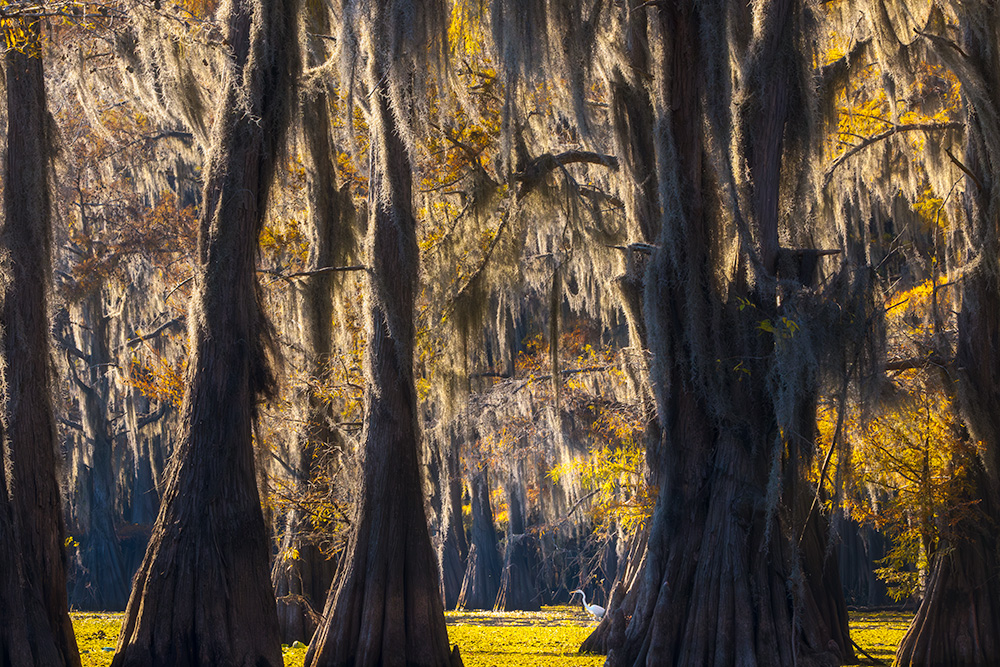
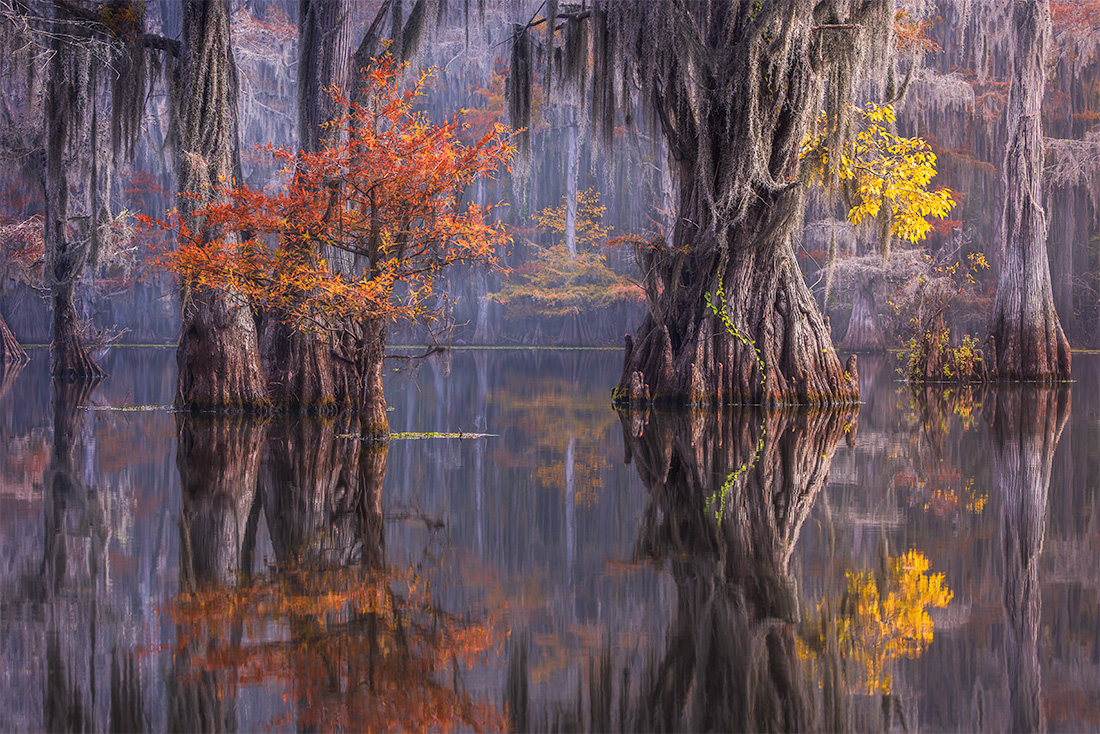
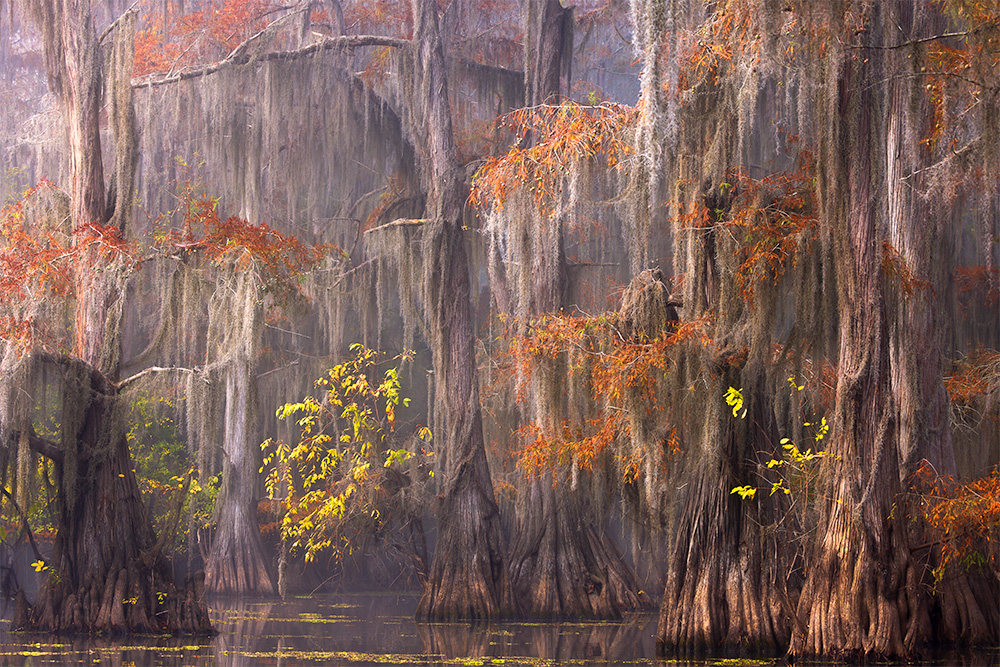
This warm, fiery color mix creates a stunning contrast against the cool, dark swamp water and the silvery-grey Spanish moss, resulting in a rich, painterly look. On a calm day, these colors reflect perfectly on Caddo Lake's water surface, creating a fully immersive scene of breathtaking warmth and saturation. Landscape photographers dream of such conditions, planning dedicated boat trips or trips by kayak to capture these unique and powerful autumn images at Caddo Lake.
Composition Techniques: Fog, Spanish Moss, and Cypress Trees
To create compelling shots that feature Caddo Lake cypress trees, Spanish moss, and fog, you must focus on creating depth and mood. Here are a few actionable techniques:
- Establish Anchors and Layers: Use the strong, buttressed trunks of the cypress trees as powerful vertical anchors in your frame. Position yourself so that layers of trees recede into the distance, with the fog enhancing this sense of depth by softening the background.
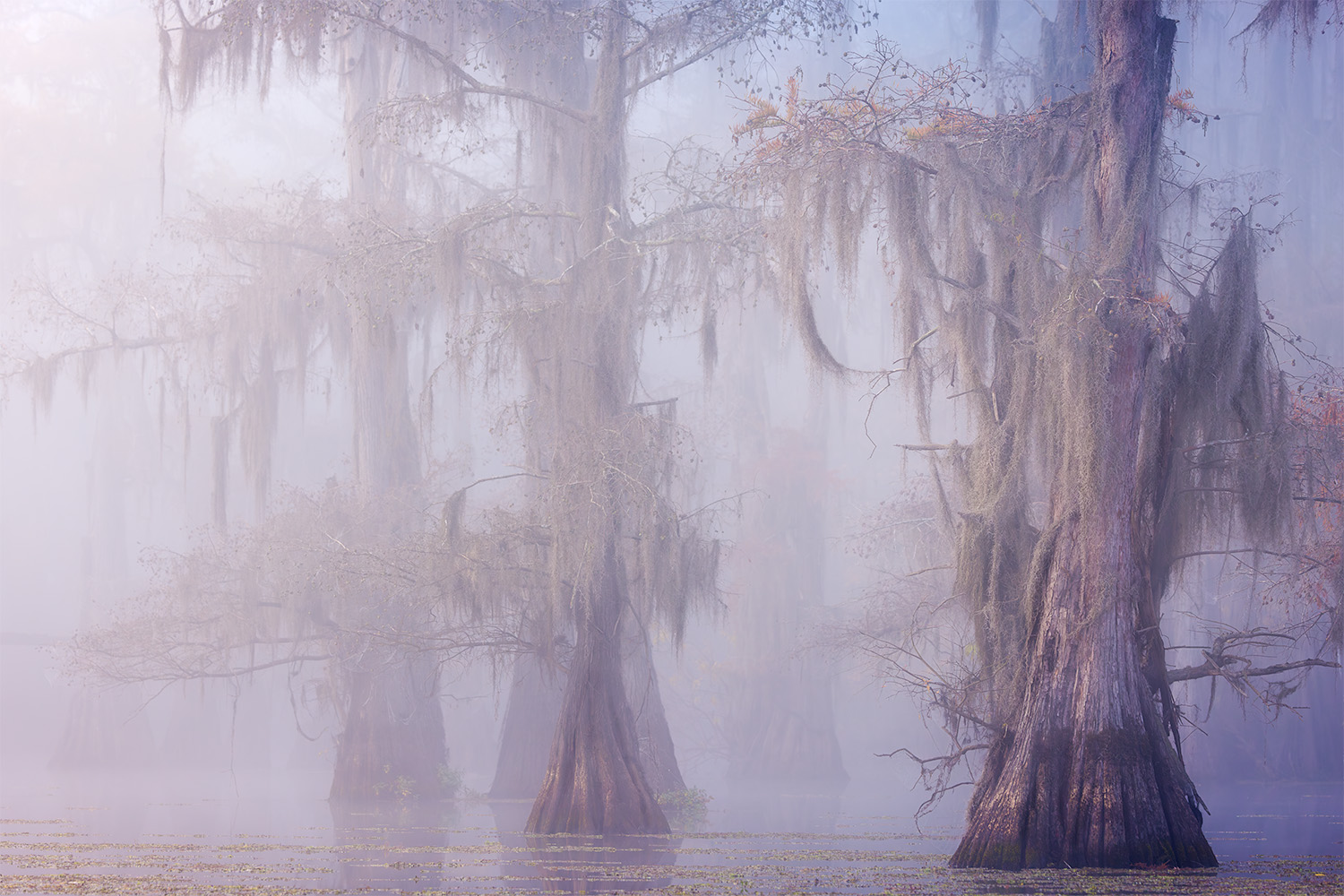
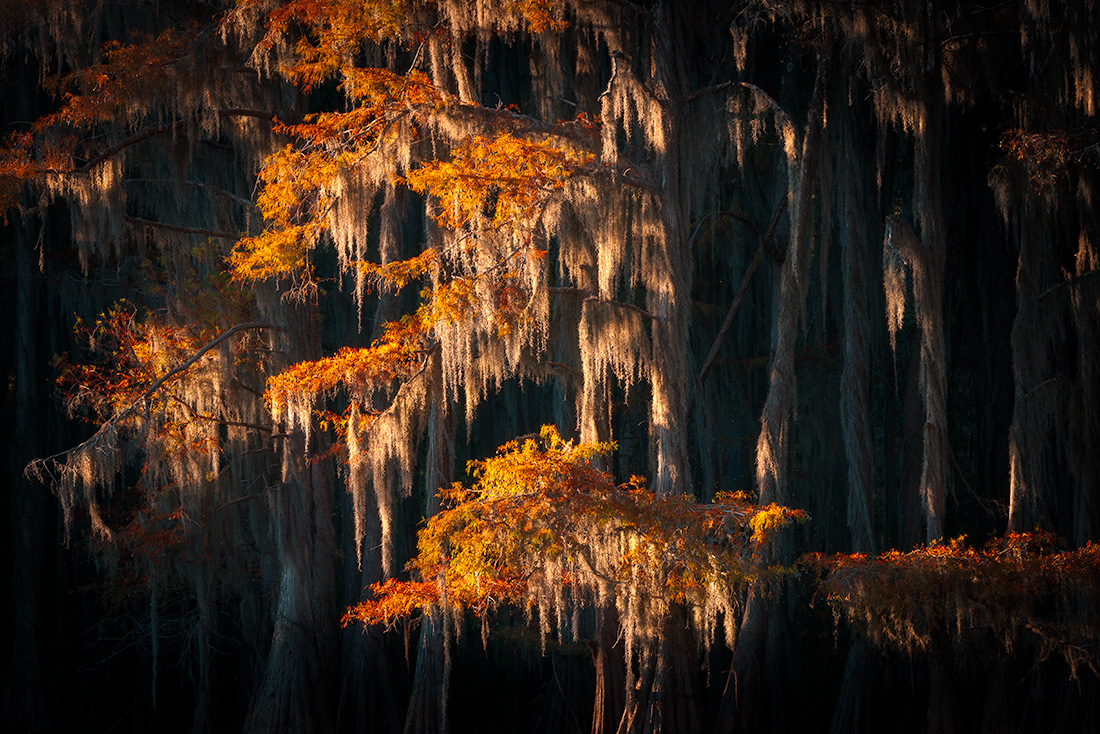
- Leverage Atmospheric Elements: Let the fog simplify the background and isolate your chosen subject, adding a sense of mystery. Use the draping Spanish moss as a soft leading line, a richly textured foreground element, or a glowing subject when backlit by the morning sun.
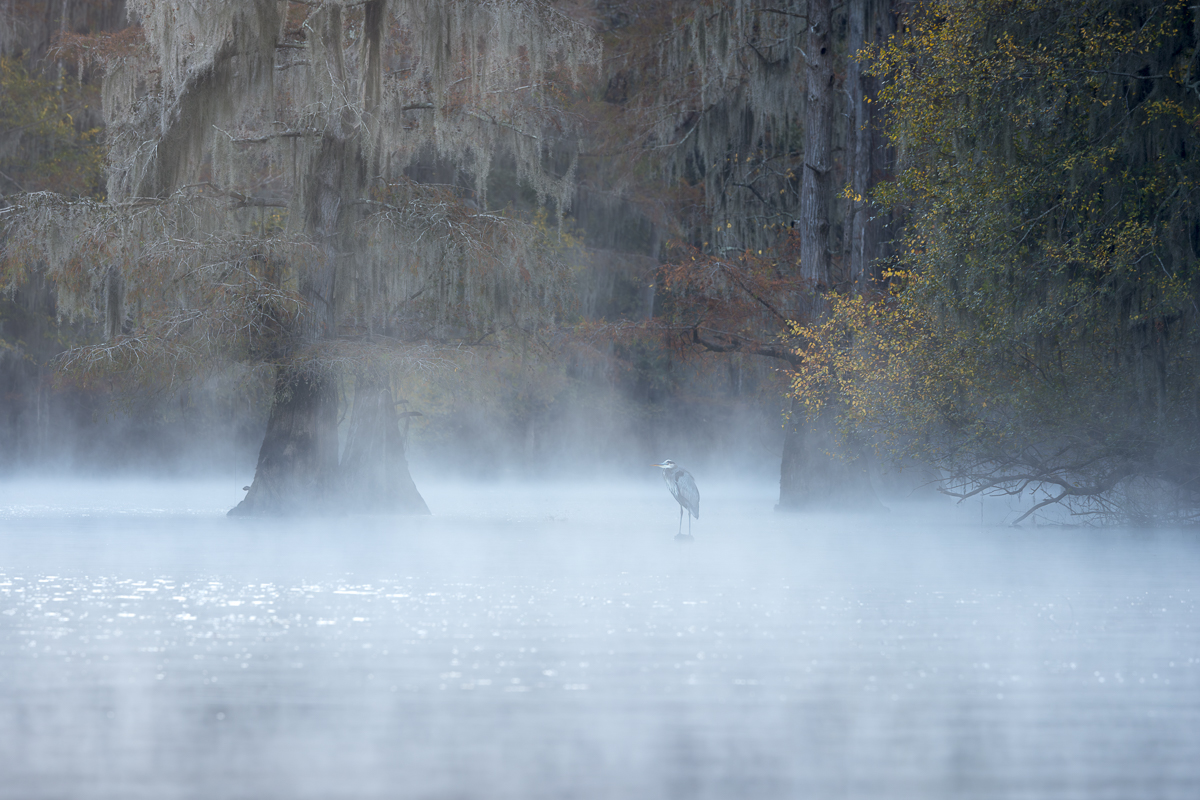
- Create a Dreamlike Effect: Look for landscape compositions where fog wraps around the tree bases at Caddo Lake, creating a dreamy, almost supernatural effect that makes them appear to float on water.
- Compress the Scene: A telephoto lens is very useful here. It helps bring distant layers closer and shows the close relationship between the trees, moss, and fog, which lets you take truly amazing photos. How focal length shapes your images.
Essential Gear for Caddo Lake Photography
A successful Caddo Lake photography trip is born from careful preparation. The right gear, clothing, and timing are essential for your safety and comfort. They also help you capture the best images in this challenging but rewarding environment. The photography industry in Texas is booming, with an expected market size of $892.8 million in 2025, showing a growing passion for the craft in the region. Investing in the right tools is crucial for your trip.
Recommended Camera Bodies and Lenses
- Weather-Sealed Camera Body: A mirrorless camera or DSLR with robust weather sealing is vital to protect against pervasive humidity, mist, and accidental splashes at Caddo Lake. A high-resolution body like the Canon R5, Sony A7R V, or Nikon Z8 excels at capturing the fine details of bark texture and moss.
- Versatile Lenses: A "holy trinity" of lenses (wide-angle, mid-range, and telephoto zoom) will cover nearly every situation at Caddo Lake. A wide-angle (16-35mm) is perfect for grand vistas, while a telephoto (70-200mm or 100-500mm) is essential for isolating details and capturing wildlife.
- Sturdy Tripod: A solid tripod is non-negotiable for sharp, low-light shots during sunrise and sunset, and for creative long-exposure work on the water.
- Circular Polarizing Filter: This is arguably the most critical accessory for Caddo Lake swamp photography. A circular polarizing filter cuts through the glare on the water's surface, revealing details below and dramatically deepening the color saturation of the foliage and reflections. The difference it makes in cutting water glare is immediate and dramatic. Bayou photography is ideal for slow shutter speed techniques — the still water and drifting fog at Caddo Lake respond beautifully to exposures of 1 to 15 seconds.
- Dry Bag: A waterproof dry bag is essential to protect your camera gear from the elements, especially when traveling in a small boat or kayak on Caddo Lake.
What to Wear and Pack for Swamp Photography
- Layered, Quick-Dry Clothing: Mornings on Caddo Lake can be surprisingly cool, while afternoons get warm and humid. Dress in synthetic, moisture-wicking layers (base layer, fleece, waterproof shell). Avoid cotton, as it retains moisture and will leave you feeling cold and damp.
- Waterproof Outerwear: A high-quality rain jacket is essential, even if rain isn't in the forecast, to protect against spray and morning dew. Rain pants are also highly recommended.
- Waterproof Boots: Knee-high rubber boots (often called Muck boots or shrimping boots) are the gold standard. They allow you to comfortably step in and out of boats onto muddy banks without a second thought.
- Insect Repellent: A must-have, especially from spring through fall. Look for a formula containing DEET, Picaridin, or Oil of Lemon Eucalyptus for the most effective protection.
- Headlamp: Essential for navigating in the pre-dawn darkness as you set up for sunrise shots at Caddo Lake.
Best Time to Photograph Caddo Lake
Seasonal Guide: When to Visit Caddo Lake
While Caddo Lake possesses a unique beauty year-round, two seasons stand out for photographers. Autumn (late October to November) is arguably the prime season, offering the spectacular rusty orange and bronze hues of the turning cypress needles. Spring (March to May) brings lush new green growth and blooming irises. The increasing popularity of the region is clear, as international visitation to Louisiana increased by over 16% in 2023, with many visitors eager to see these iconic landscapes. Winter provides a starker, more skeletal beauty, while summer is intensely hot and buggy, making it the most challenging season.
| Season | Colors | Conditions | Best For |
|---|---|---|---|
| Fall (Oct-Nov) | Rust, orange, bronze cypress | Cool mornings, heavy fog | ⭐ BEST SEASON - Peak colors |
| Spring (Mar-May) | Fresh green, blooming irises | Mild temps, active wildlife | Vibrant growth, bird rookeries |
| Winter (Dec-Feb) | Muted, stark, skeletal | Cold, possible frost | Minimalist compositions |
| Summer (Jun-Aug) | Deep green, lush | Hot, humid, heavy insects | ⚠️ Most challenging - avoid if possible |
Best Times of Day: Sunrise and Golden Hour at Caddo Lake
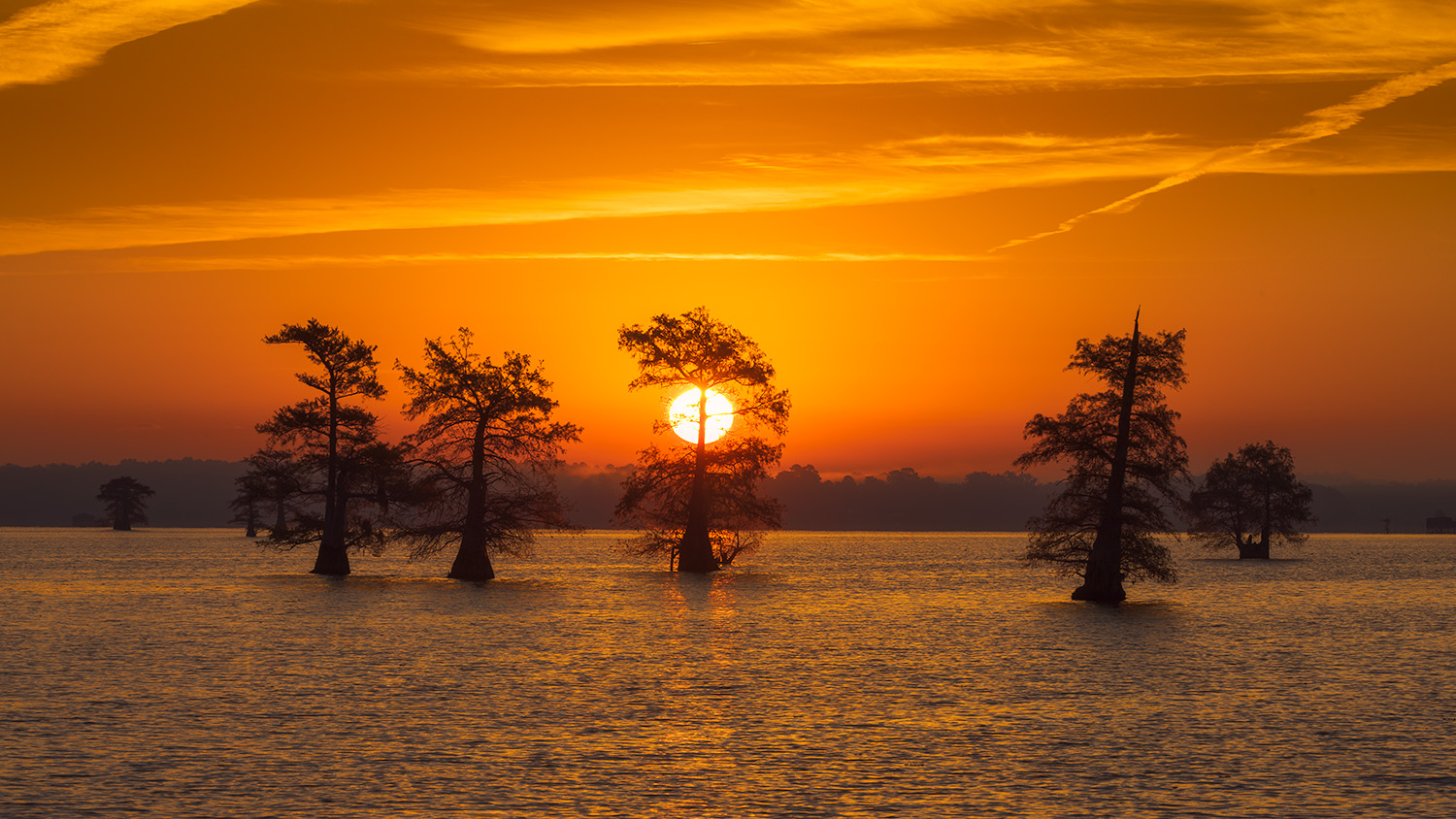
The "golden hours" immediately surrounding sunrise and sunset are paramount for capturing magical light at Caddo Lake. Early morning is particularly special, as the cool night air meeting the warmer water creates thick, ethereal layers of mist and fog. An ideal forecast is a calm, cool night followed by a clear sky at first light. This creates the best conditions for heavy mist. The sun then lights the mist from behind as it rises through a glowing sky, making the Spanish moss glow as if lit from within. The remarkable biodiversity of the bayou is most active in these first quiet hours — wading birds hunt the shallows, turtles emerge to bask, and the occasional alligator slides silently across calm water.
Don't discount overcast days; they provide soft, diffused light that acts like a giant softbox, perfect for capturing rich detail and color saturation without any harsh shadows. Late afternoon also provides good lighting conditions for photographing cypress trees, with warm directional light that picks out the texture of bark and the layered depth of moss-draped branches before the sun drops behind the western tree line.
Why Fog, Mist, and Backlit Spanish Moss Matter
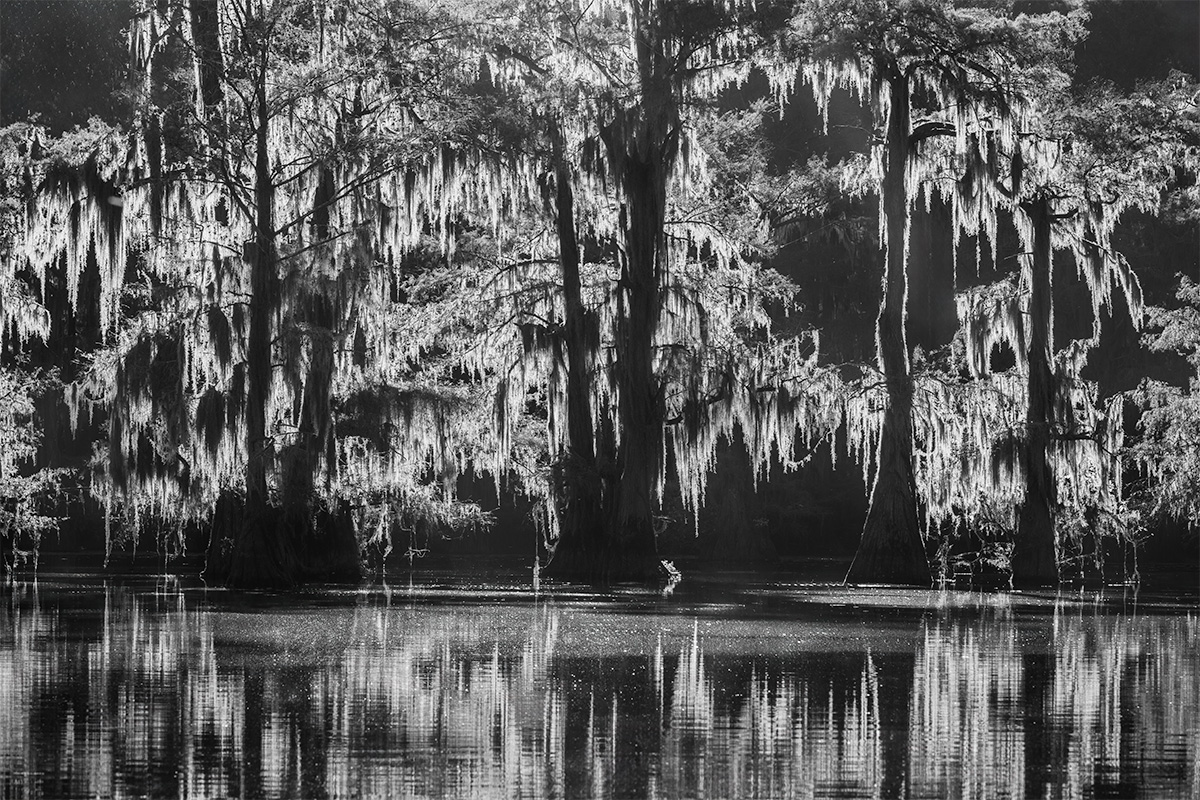
These atmospheric elements are not just weather events at Caddo Lake; they are powerful compositional tools that can transform a good photograph into an exceptional one. Fog and mist simplify complex, "busy" scenes by obscuring distant clutter, which helps isolate your subjects and create a powerful sense of depth, mystery, and mood. A clear sky overhead with low fog at water level is the configuration that produces the most dramatic backlit images here. When the low sun shines from behind at Caddo Lake, cypress moss and Spanish moss catch the light and seem to glow. They create a silver or golden edge that adds texture, contrast, and a magical touch to the scene. Mornings like this consistently produce more photos worth keeping than any other condition on the lake.
Getting to Caddo Lake: Access and Navigation
Accessing the true heart of Caddo Lake swamp requires a watercraft. Many photographers opt for guided boat trips, especially on their first visit. Local tour operators in towns like Uncertain, Texas, offer charter boat packages specifically designed for photography. These hassle-free adventures remove the guesswork of navigating complex waterways, allowing you to focus entirely on your craft and be in the right place at the right time at Caddo Lake.
Kayaking Caddo Lake for Photography
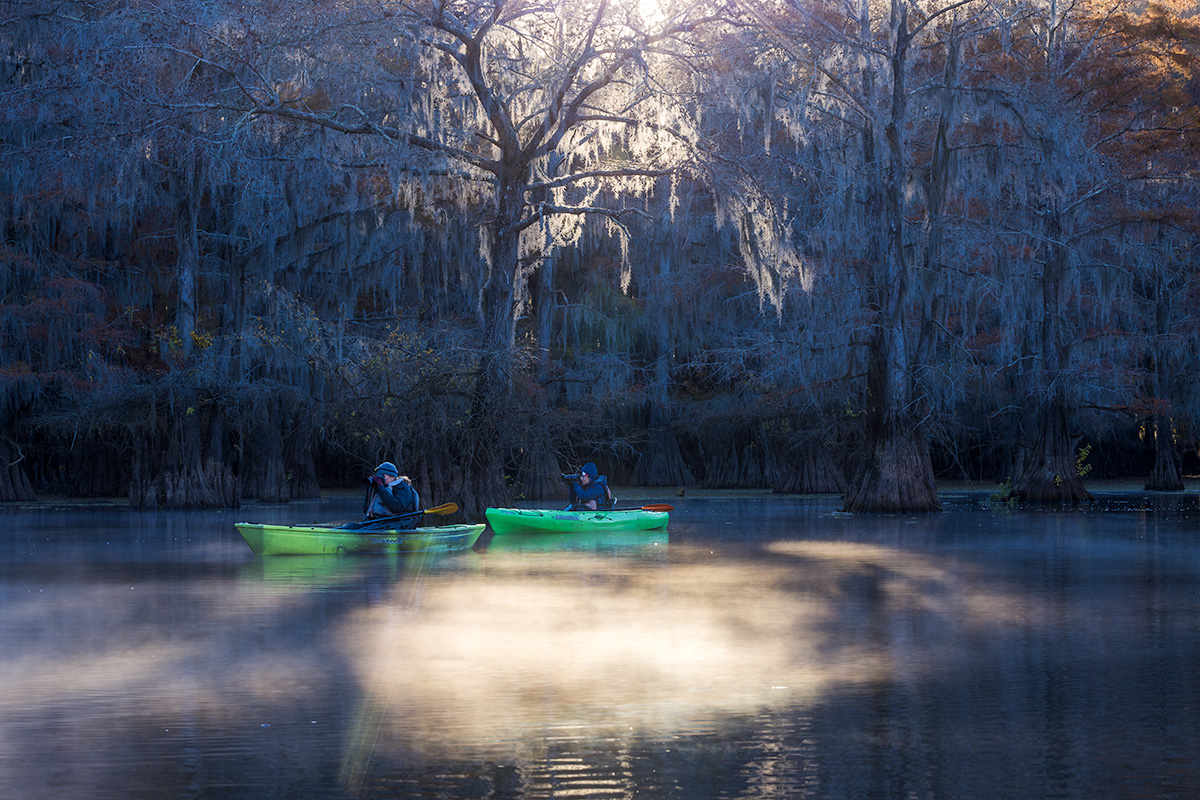
A kayak offers a silent, intimate, and profoundly immersive way to explore Caddo Lake's hidden corners. For effective photography, use a stable, wide-bottomed recreational kayak. Always keep your primary camera gear secured in a dry bag and tethered to the boat until you are stationary and ready to shoot. A paddle leash is essential to prevent your paddle from drifting away while your hands are occupied. Use your paddle as a rudder for small adjustments and let yourself drift quietly to approach wildlife without startling it. This method allows you to find unique, low-angle perspectives that larger boats cannot reach, connecting you directly to the pulse of Caddo Lake swamp.
Boat Tours vs. Kayaking: Which is Better?
The choice of watercraft significantly shapes your Caddo Lake photographic experience. A pontoon boat offers superior stability, space, and comfort. You can securely set up a tripod, have multiple camera bodies and lenses within easy reach, and move around to find different angles. They're ideal for my Caddo Lake photography workshop format, for photographers with extensive gear, or for covering larger distances efficiently on the lake. Their main drawbacks are a higher vantage point and engine noise, which can disturb wildlife.
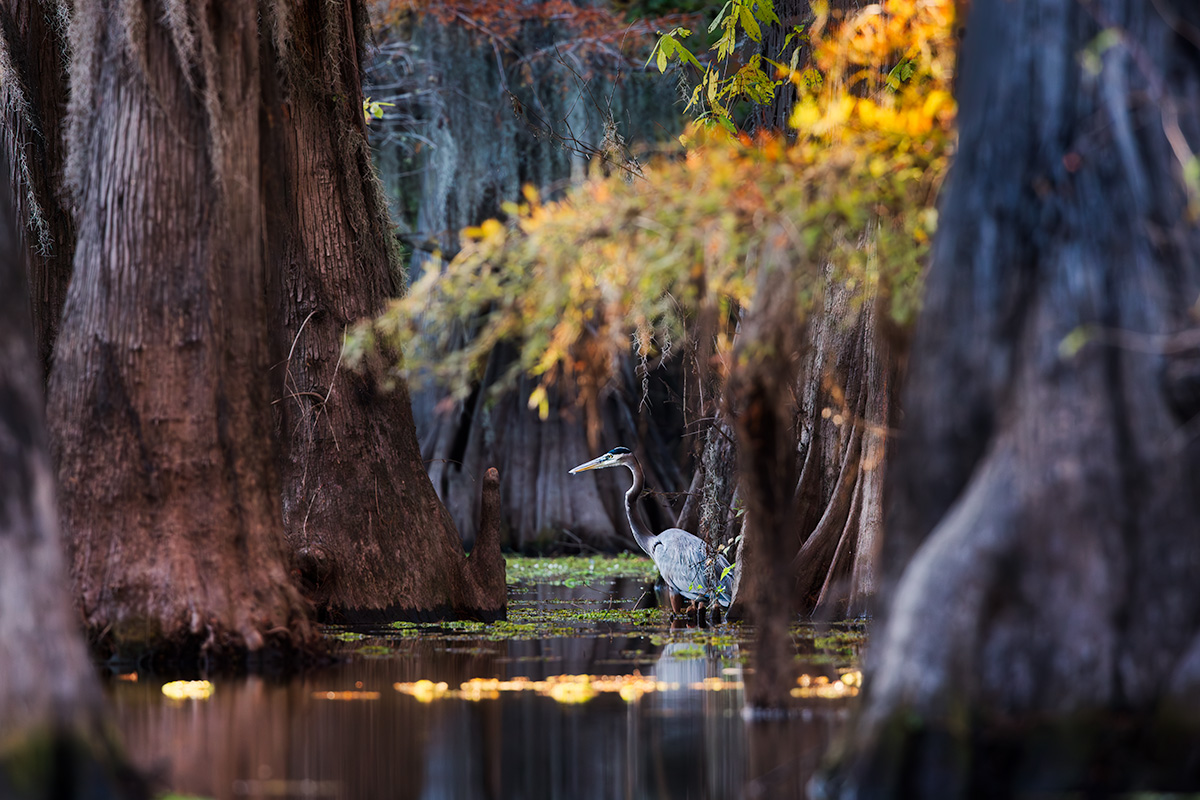
Kayaks, in contrast, provide a dramatic, low-angle perspective that places the viewer right at water level at Caddo Lake, creating more intimate and immersive photos. Their silent approach is unmatched for getting close to wading birds like the Great Blue Heron and other wildlife. However, they offer limited space and less stability.
Safety Considerations for Caddo Lake Photography
Safety must be your top priority at Caddo Lake. Always wear a personal flotation device (PFD). File a float plan: tell someone reliable exactly where you are going and when you expect to return. Your pack should always contain a headlamp (even for a day trip), a loud whistle, a basic first-aid kit, and more water and snacks than you think you'll need. Be constantly aware of your surroundings at Caddo Lake; alligators and venomous snakes typically avoid humans but must always be given a wide berth. Stay in the main channels unless you are an experienced navigator with a reliable GPS, as it is incredibly easy to get lost in the labyrinthine waterways. Never paddle alone in remote areas of Caddo Lake.
Cypress Swamp Photography Techniques
With your gear and logistics sorted, the focus shifts to creative execution. This is where you truly learn the art of capturing the soul of Caddo Lake and Louisiana cypress swamps. The remarkable biodiversity here — from cypress forests to herons to alligators — rewards photographers who slow down enough to actually see it. Image making at Caddo Lake is at its strongest in the early morning, when fog still clings to the water and the light is soft enough to wrap around every detail. To do so, you must learn how to compose your photos well, developing a deep understanding of light and an abundance of patience.
Composition: Leading Lines, Reflections, and Scale
- Leading Lines: Use the narrow channels of water at Caddo Lake, called sloughs, or converging rows of bald cypress trees to create powerful leading lines that guide the viewer's eye deep into the frame, adding a sense of depth and journey.
- Reflections: On calm mornings at Caddo Lake, the water becomes a flawless, mirror-smooth water surface. This is a gift. Place your horizon line carefully to either emphasize the reflection (placing the horizon high in the frame) or the trees themselves (placing it low). Look for abstract patterns and intimate scenes within the reflected colors and textures.
- Sense of Scale: The ancient cypress trees at Caddo Lake are immense, and conveying that scale is key. Include a small kayak, a lone fisherman, or a wading bird in your composition to provide a reference point that highlights the grandeur of the surrounding cypress tree forests.
Working with Light and Atmospheric Conditions
Your primary goal at Caddo Lake is to capture mood. Use backlighting during a Caddo Lake sunrise to make the fog and moss glow radiantly. Sidelight is excellent for revealing the gnarled, intricate texture of cypress bark and the unique forms of their cypress knees. On overcast days, shift your focus from grand landscapes to intimate scenes, abstract reflections, and the deeply saturated colors of the foliage and water at Caddo Lake. Never be afraid of what some consider "bad" weather; a moody, foggy, or even rainy day often yields far more compelling and unique images than a bright, cloudless sunny one. The strongest morning I had on my 2025 scout was overcast with patchy fog — flat-light conditions most landscape photographers would write off — and it produced more keepers than the sunny morning that followed.
Wildlife Photography at Caddo Lake
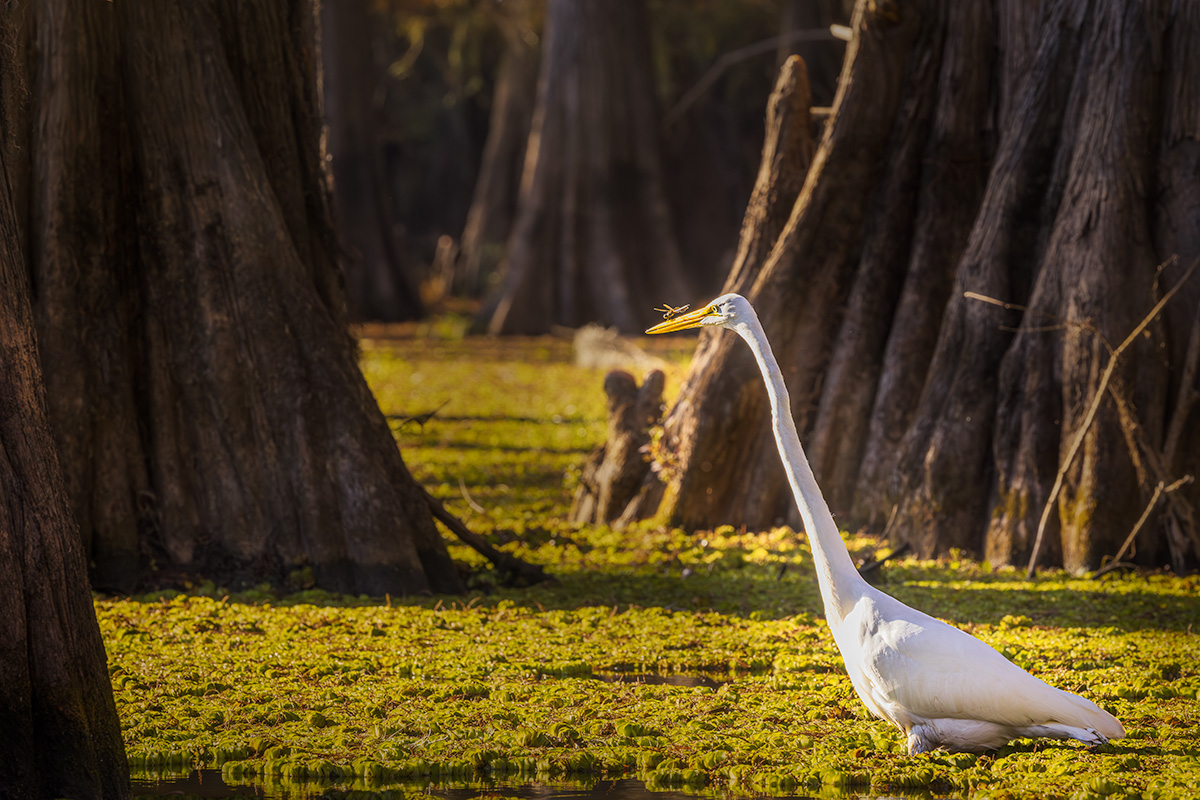
Caddo Lake is teeming with life—alligators sunning on logs, turtles stacked like coins, and a breathtaking array of birds like herons, egrets, and the elusive barred owl. The best wildlife photos come from patience. Use a long telephoto lens and a quiet watercraft. Turn off your engine or stop paddling and simply drift, allowing the wildlife to become accustomed to your presence. The number one rule is to never disturb the animals at Caddo Lake. Do not feed them, approach active nests, or corner them in a way that makes them feel threatened. Your presence should have no impact on their natural behavior. An ethical photograph is always more valuable than one obtained by stressing an animal.
Creative Techniques: ICM and Long Exposure
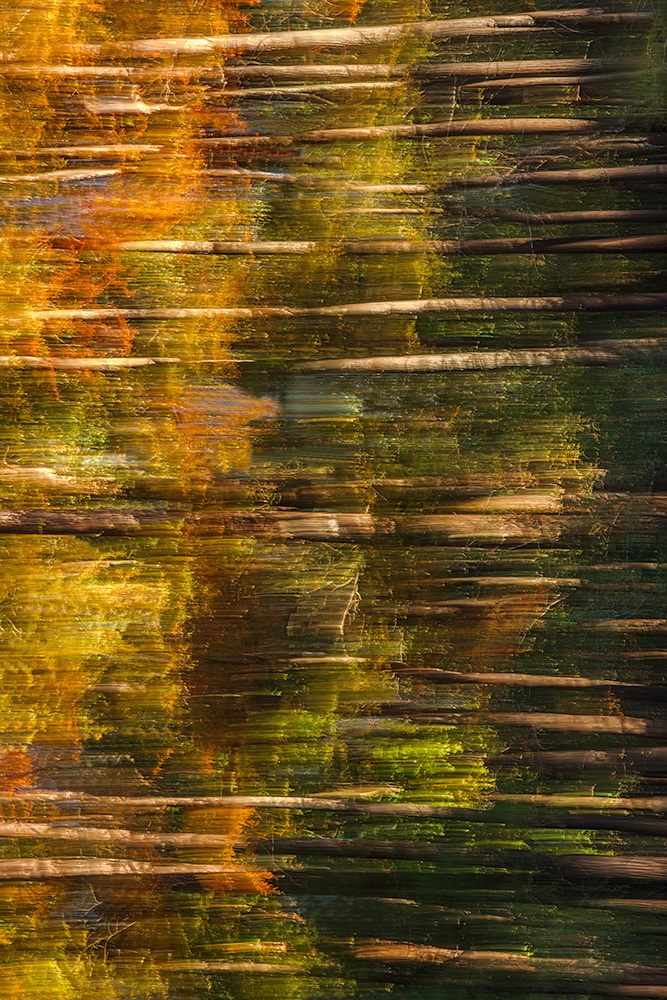
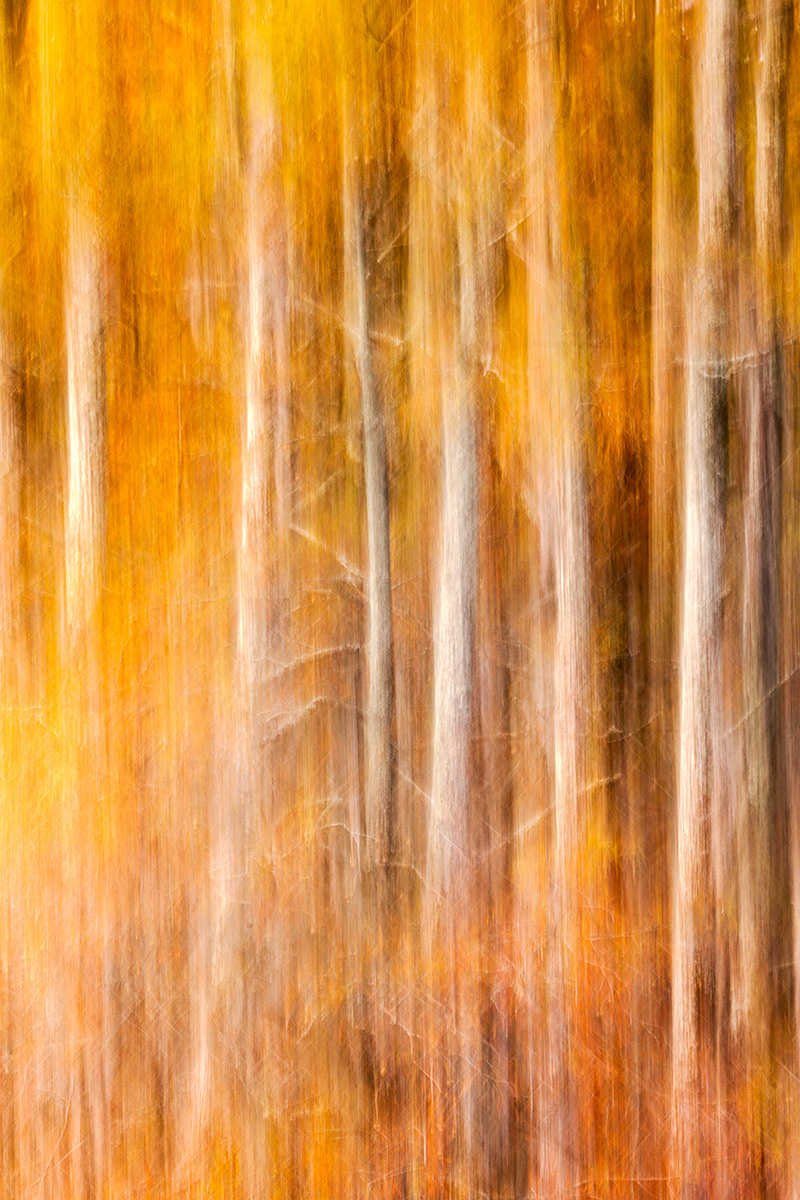
Look for opportunities beyond the classic wide-angle landscape at Caddo Lake. Use your telephoto lens to isolate a single, glowing strand of Spanish moss, the intricate pattern of cypress knees emerging from the water, or the texture of weathered bark. Experiment with long exposures on a tripod to render the water as a silky, dreamlike surface, which creates a beautiful contrast with the sharp, detailed texture of the trees. Try Intentional Camera Movement (ICM). Slowly pan your camera up and down along the tree trunks with a slow shutter speed. This creates a soft, painterly, and abstract image of the Caddo Lake cypress tree forests.
Best Caddo Lake Photography Locations and Beyond
While countless unnamed bayous offer stunning beauty, a few key locations within Caddo Lake and the Bayous of Louisiana serve as excellent hubs for any photographic trip.
Caddo Lake State Park and Wildlife Management Area
Caddo Lake State Park / Wildlife Management Area: Straddling the Texas-Louisiana border near Marshall, Texas and Uncertain, Texas, Caddo Lake is the quintessential cypress swamp and the largest of its kind in the South. It is a vast, confusing, and utterly magical maze of bayous, sloughs, and shallow lakes filled with ancient, moss-draped cypress trees. The area offers diverse scenery, from the wide-open views of Big Lake to intimate, cathedral-like waterways. Spots like Mill Pond offer classic, accessible views. Due to its complexity, hiring a local guide for your first few visits to Caddo Lake is highly recommended to navigate this labyrinth safely and find the best locations for a fiery sunset. On my November 2025 scouting trip I worked with a local guide for exactly this reason — the maze of sloughs reads as identical from the water until you've spent years on it, and the right partner saves you days of trial and error. My Caddo Lake Texas photography gallery.
Louisiana Bayou Photography Locations
- Lake Martin: Located near Breaux Bridge, Louisiana, this rookery is a bird photographer's paradise. In the spring, it is filled with thousands of nesting Roseate Spoonbills, Great Egrets, anhingas, and herons, making it ideal for capturing stunning bird behavior with a classic cypress background.
- Atchafalaya Basin: As America's largest river swamp, the Atchafalaya Basin in Louisiana is a vast, untamed wilderness. This is where you'll find a wilder, more remote version of the bayou, offering thrilling adventures and a true sense of exploration. Guided boat trips or a photography tour are the best way to explore its remote beauty safely.
- Jean Lafitte National Park and Preserve: Just a short drive from New Orleans, this park offers accessible boardwalks that wind through beautiful cypress stands, making it a great option for those without a boat or with limited time.
Safety and Ethics in Cypress Swamp Photography
Your responsibility as a photographer extends far beyond creating beautiful images. It includes protecting the fragile Caddo Lake ecosystem you are visiting and ensuring your own safety throughout your adventure.
Navigating Caddo Lake Safely
Water levels at Caddo Lake can fluctuate dramatically, and submerged stumps, logs, and other hazards are common. Travel slowly and cautiously in boats. Always have a reliable GPS device and a physical map as a backup, as cell service can be spotty or non-existent at Caddo Lake. Be aware of venomous snakes like the cottonmouth, which are common but generally not aggressive unless threatened or startled. Never reach into areas you can't see, and be mindful of where you step on shore.
Leave No Trace Principles
The health of the Caddo Lake ecosystem depends on the respectful behavior of its visitors. Adhere strictly to Leave No Trace principles. Pack out everything you pack in. Avoid damaging the sensitive cypress knees or other vegetation when mooring your boat or setting up a tripod at Caddo Lake. Stay on designated trails and boardwalks where they exist. Caddo Lake is a fragile ecosystem that faces challenges such as invasive species — most notably giant salvinia, which has choked off entire sections of historically open water — and growing human activity, making responsible photography practices essential to protect its integrity. The Caddo Lake ecosystem is a precious natural resource, and its preservation is paramount for future generations to enjoy.
Respecting Wildlife and Local Communities
Hire local Caddo Lake guides. Their knowledge is invaluable for both finding the best photo spots and for understanding the complex ecosystem you're exploring. This also provides direct support to the local economy in Uncertain, Texas and surrounding communities. Maintain a respectful distance from all wildlife at all times at Caddo Lake. When photographing local life, such as fishermen, capture moments from a distance to show a human element within the landscape. If you want a closer portrait, always ask for permission first and respect their answer. Remember that you are a guest in their home and their workplace.
Join My Caddo Lake Photography Workshop
Ready to put these techniques into practice with expert guidance? I lead intimate, small-group photography workshops at Caddo Lake during peak fall colors in the month of November. Limited to just 5 participants, my hands-on workshops ensure personalized instruction and access to the best shooting locations at Caddo Lake.
What's Included in the Caddo Lake Workshop
- 4 Days of guided photography instruction at Caddo Lake
- Sunrise & Golden Hour Sessions on the water during peak fog conditions
- Private Boat Access to the best photography locations at Caddo Lake
- Composition Critiques and on-location teaching in real-time
- Evening Post-Processing Sessions (Lightroom & Photoshop)
- Small Group Size (5 photographers maximum per session)
- All Skill Levels Welcome - from beginners to advanced
- Local Expert Guidance - navigate Caddo Lake's maze safely
If you're new to landscape photography, my beginner's guide covers the camera settings, composition techniques, and gear basics you'll use throughout the workshop.
What Previous Workshop Attendees Say
"Another great workshop (my second) Norway what a beautiful place, so many opportunities for great pictures. Michael did a great job picking Norway..."
"Highly recommend Face The Outdoors Photography. Michael is an amazing teacher, guide and artist. Having a great time and looking forward to another workshop soon."
2027 Caddo Lake Workshop Dates & Pricing
Fall 2027 Workshop: November 6-9, 10-13, 14-17 2027 (Peak color timing at Caddo Lake)
Investment: $2,800 (Limited to 5 participants)
Status: Open Registration
Not sure if the Caddo Lake workshop is right for you? Email me with questions - I'm happy to discuss what you'll learn and whether it matches your photography goals.
Frequently Asked Questions About Caddo Lake Photography
When is the best time to photograph Caddo Lake?
The best time to photograph Caddo Lake is during fall (late October through November) when cypress needles turn rust, orange, and bronze colors. Sunrise offers the most dramatic light with fog and mist creating atmospheric conditions. Spring (March-May) is the second-best season with lush green growth and blooming irises.
What camera gear do I need for Caddo Lake cypress swamp photography?
Essential gear for Caddo Lake includes: weather-sealed camera body (Canon R5, Sony A7R V, Nikon Z8), wide-angle lens (16-35mm f/2.8), telephoto zoom (70-200mm or 100-500mm), sturdy tripod, circular polarizing filter (critical for removing water glare), and waterproof dry bag. The circular polarizer is the most important accessory for swamp photography at Caddo Lake.
Is it safe to kayak in Caddo Lake for photography?
Yes, kayaking Caddo Lake is safe with proper precautions. Always wear a PFD (life jacket), tell someone your plans, bring navigation tools (GPS + map), pack safety essentials (headlamp, whistle, first aid), maintain distance from alligators and snakes, stay in main channels unless experienced, and never paddle alone in remote areas of Caddo Lake. Local guides offer safer options for first-time visitors.
How do I photograph Spanish moss at Caddo Lake effectively?
Backlit Spanish moss at Caddo Lake creates the most dramatic effect - position yourself so the rising or setting sun illuminates the moss from behind, making it glow golden or silver. Use fog or mist to enhance the effect. A telephoto lens helps isolate hanging strands. Spanish moss works as both a foreground element and as draping texture throughout your frame at Caddo Lake.
What locations in Caddo Lake are best for photography?
Top spots at Caddo Lake include Mill Pond for accessible classic views, Big Lake for wide-open vistas, and the narrow sloughs throughout the Wildlife Management Area for intimate cathedral-like scenes. Due to the complex maze of waterways, hiring a local guide is recommended for first visits to reach the best locations safely.
Can beginners join the Caddo Lake photography workshop?
Yes, the Caddo Lake workshop welcomes all skill levels from beginners to advanced photographers. Instruction is personalized to your experience level, covering camera basics through advanced composition techniques. Small group sizes (5 participants) ensure everyone receives individual attention.
Where can I stay near Caddo Lake for photography?
Uncertain, Texas is the closest town to Caddo Lake and offers several lodging options including cabins, B&Bs, and the Caddo Lake State Park camping. Marshall, Texas (20 minutes away) has more hotel options. For the workshop, I provide accommodation recommendations near the best photography access points.
Beyond the Lens: Immersing Yourself in Caddo Lake
Some of the most profound moments at Caddo Lake happen when the camera is down. Allow yourself ample time to simply be present in this incredible environment.
Connecting with the Sounds and Silence of Caddo Lake
Turn off your boat motor, put down your paddle, and just drift on Caddo Lake. Listen to the deep chorus of frogs, the splash of a turtle sliding off a log, and the call of a pileated woodpecker echoing through the trees. Feel the heavy, profound silence that exists between these sounds. The Caddo Lake soul is not just in what you see, but in what you hear and feel. This full sensory immersion will not only make your visit richer but will translate into more emotive, authentic, and powerful photographs.
Conclusion: Capturing the Soul of Caddo Lake
Photographing Caddo Lake and the cypress swamps of Texas and Louisiana is more than a creative task; it is a deep experience in one of North America's most atmospheric and unique landscapes. Success lies in a blend of thoughtful preparation, technical skill, and a profound respect for the wild environment. By choosing the right gear, understanding light and weather, and mastering composition, you can move beyond simple snapshots to capture the true, haunting soul of Caddo Lake bayou.
Whether you glide through the misty channels of Caddo Lake in fall or watch a Great Blue Heron hunt in the Atchafalaya Basin, these moments will stay with you long after you put your camera away. Plan your Caddo Lake trip with a mindset of patience and curiosity, embrace the swamp mysteries, and you will return not just with stunning images, but with a deep connection to one of America's greatest natural treasures.